Thanks to an astute follower of ours on X, I was informed that Christopher Alexander released what he called a “rebuttal.” However, this reply reads more like an escapee splashing through a shallow stream, hoping the water will break the trail. The problem is obvious: when your arguments are no deeper than puddles, the hounds of public opinion won’t lose the scent.
The “rebuttal” declined to address even a single piece of evidence we uncovered. Instead, he repeats the same stale accusations and misrepresentations he and Christy Haik have circulated for years. He does so without naming even one Louisiana citizen who was censored at Kyle Ardoin’s request. Amid all the noise, his inability to produce even a single victim remains the most deafening sound.
Contrast that with our article, which identified real censorship carried out by a real actor using real documents authenticated by the U.S. House Judiciary Committee. The Democratic National Committee flagged Louisiana conservatives, Louisiana organizations, and Louisiana posts for action. Then the EIP processed twenty-eight subtasks at the Democrats’ request. Isn’t it remarkable to watch the lengths Alexander goes to avoid that elephant — or perhaps donkey — in the room? This is especially notable given that the DNC was the only entity that (the Jira logs prove) was censoring anyone in Louisiana.
Familiar Recurring Patterns
Instead, he returns to the familiar pattern: accusation without evidence, with the expectation that everyone should simply take his word for it. This methodology is precisely why LACAG — and Haik’s “Louisiana Republican Assembly,” which frankly is the same organization using a brand-diversification trick — have become two of the least-trusted political voices in the state. As for “Republican” branding, Lady Thatcher reminds us — slightly paraphrased — that being Republican is like being a lady: if you have to say you are, you aren’t.
The only “proof” Alexander offers is a Zoom call we’ve all seen. That call shows no specific request to remove content and no action taken against any Louisiana citizen. He’s simply outraged that our Secretary of State’s office would dare to watch for knowingly false election information — a fiduciary duty of that office. In fact, “knowingly false” is a very specific legal term. It is the crime for which Jesse Regan’s campaign manager, Eddie Lau, was arrested! And yet Alexander’s LACAG endorsed Regan and has not uttered a word about Lau’s arrest for trying to trick voters with “knowingly false” information during an election.
Alexander also gestures toward two emails buried in tens of thousands of pages of litigation, neither of which indicates that the Secretary of State asked any platform to take anything down — a point conspicuously absent from Alexander’s telling. After all this time, the fact that Alexander still cannot (or perhaps refuses to) identify the supposedly “censored” individual or individuals should tell readers everything they need to know.
Free Speech vs. Knowingly False
Alexander continually leans heavily on the term “free speech” as a defense. However, his version appears to include everything from disrupting Republican Women’s meetings to conduct that gets people arrested, such as spreading “knowingly false” election information. Louisiana law — and common sense — recognizes a difference between political opinion and intentionally tricking voters.

His response never explains what standard, if any, he believes should exist. He also remains silent on whether his own allies’ arrest for distributing knowingly false election information should qualify as protected “free speech” under his standards. Still, his position appears to be that a state official tasked with ensuring clean and honest elections — merely by expressing a concern and calling for vigilance in compliance with state law — is somehow guilty of “tyranny.”
The larger point remains completely unaddressed by Alexander. That is, we showed exactly who was censored, and precisely who requested it. The DNC targeted Louisiana conservatives, and Alexander and Haik spent years ignoring it and shifting the blame to Kyle Ardoin. Those two facts remain untouched in his entire response. Rather than correcting the record when the truth became publicly available, he’s doubled down on attacking Republicans.
The Public Expects My Perspective
After we provided proof of censorship, some of our friends noticed LACAG and LRA circling the wagons and suggested we address it. So, allow me to do just that. As a former criminal defense attorney, Alexander knows none of his and Haik’s accusations would stand up in court. There’s no motive, no murder weapon, no crime scene, and, frankly, no crime. Not only is there no corpse, but they still cannot identify who — or even whether — anyone suffered harm. That last part is key.
Alexander and Haik aren’t claiming that they were censored. In fact, they aren’t even claiming to know anyone who was censored. This whole exercise was contrived as a campaign tactic to help their supported candidate — and they endorsed a Democrat. Alexander’s response completely ignores this point.

Do Your Own Math
Readers can, should, and will draw their own conclusions without any expectation to take my word for it. But Alexander and Haik’s pattern is becoming increasingly difficult to ignore. When presented with evidence against Democrats, LACAG offers speculation against Republicans; when shown documented DNC censorship, they gesture at unrelated emails from Republicans; when faced with the truth, they change the subject. That’s not a rebuttal — it’s evasion dressed up as indignation.
As ever, we continue our commitment to untangling the threads and letting the facts lead where they will. We’ve done that here. Instead of facts, truth, and self-authenticating public records, Alexander has responded with resentment and veiled threats. Rather than belaboring this any further, let us close with a quote from one of the fifty-six — a number we’ll revisit soon enough. The ever-eloquent Thomas Jefferson’s quip seems particularly fitting: “Truth will do well enough if left to shift for herself.”
###
Growing the Team to Match the Moment
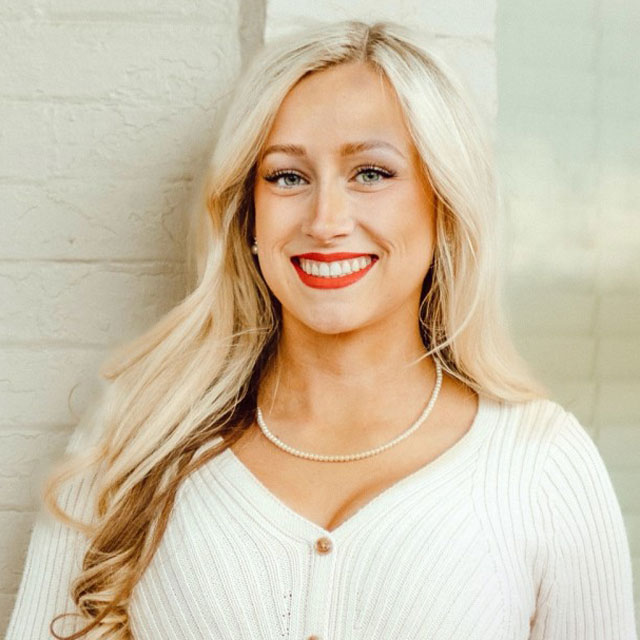 As our work expands, so does the responsibility to do it well. We are proud to welcome Grace Sandefur as Citizens for a New Louisiana’s new Legislative Policy Director.
Grace brings legal training, legislative experience, and grassroots engagement into a single role focused on strengthening relationships at the Capitol and beyond. A Juris Doctorate candidate concentrating on legislation and government, she has worked in state and federal legislative offices, the Louisiana Department of Justice, and on multiple successful conservative campaigns across the state.
She is also a familiar presence at the Louisiana State Capitol, where she has testified on legislation and engaged directly in the policymaking process. In 2026, she will play a key role in coordinating outreach, supporting member engagement, and helping ensure that citizen voices are organized, informed, and heard.
As 2026 unfolds, your ongoing support has already changed the trajectory Louisiana. With your help, it can change much more. Your support ensures not just Louisiana’s conservative future, but the future of several new states, too. Join the movement today!
Become a Monthly PartnerContribute $10 NowMake a Tax Deductible Gift
Gifts can be tax-deductible and help expand our 2026 legislative work to even more states.