6 bills pending
Members
 🥇 Joseph Bouie (D)
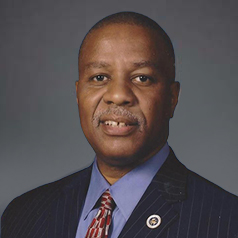 🥈 Gerald Boudreaux (D)
Pending Bills

SB84: Provides for employment with the Ernest N. Morial-New Orleans Exhibition Hall Authority. (gov sig)
Last Action: Introduced in the Senate; read by title. Rules suspended. Read second time and referred to the Committee on Local and Municipal Affairs.
Date: 2025-04-14
Author: Kirk Talbot (R)
SB224: Provides for the creation of the Parish Preservation Act. (8/1/25)
Last Action: Introduced in the Senate; read by title. Rules suspended. Read second time and referred to the Committee on Local and Municipal Affairs.
Date: 2025-04-14
Author: Regina Barrow (D)
Creates the Parish Preservation Act, requires a public report and meeting before a municipality may change allocation of parish tax revenue that would reduce a consolidated parish government’s general fund by more than 5%. Applies only to parishes with populations between 445,000 and 460,000. Reports must detail anticipated impacts on service delivery, municipal plans, and effects on underserved areas.
Key Provisions:
- Requires public meeting with a report from both the municipality and consolidated parish government.
- Applies when a tax revenue reallocation exceeds 5% of the parish general fund.
- Mandates detailed reporting on service impacts and affected populations.
- Does not override parish plans of government.
Effective August 1, 2025.
SB242: Provides for the authority of the Public Service Commission. (gov sig) (OR INCREASE SG RV See Note)
Last Action: Read second time by title and referred to the Committee on Local and Municipal Affairs.
Date: 2025-04-28
Author: Robert Owen (R)
Transfers regulatory authority over the New Orleans Sewerage and Water Board from the New Orleans City Council to the Louisiana Public Service Commission (PSC).
Key Provisions:
- Requires PSC approval of water and sewerage rate increases instead of City Council approval.
- Grants the PSC authority to audit, examine, and subpoena records from the Sewerage and Water Board.
- Allows the PSC to set terms for audits and access working papers of outside accountants.
- Shifts rate dispute appeal authority from the City Council to the PSC.
- Repeals a section of existing law (R.S. 33:4159.2) likely tied to now-removed City Council oversight.
HB48: Authorizes the city of Slidell to levy a hotel occupancy tax
Last Action: Read second time by title and referred to the Committee on Local and Municipal Affairs.
Date: 2025-05-07
Author: Brian Glorioso (R)
HOUSE committee amendments technical
Enacts R.S. 47:338.265 to authorize Slidell’s governing authority to levy a hotel occupancy tax up to 5% on room rents, subject to voter approval. The tax, paid by guests, funds recreational facilities or other municipal purposes outlined in the voter proposition. The city can contract with public entities for collection and set rules via ordinance. Effective upon governor’s signature or lapse of veto period, this bill boosts local revenue with community consent.
HB284: Provides for the abolition of the office of police chief and police department in the village of Hall Summit
Last Action: Read second time by title and referred to the Committee on Local and Municipal Affairs.
Date: 2025-05-29
Author: Dennis Bamburg (R)
Proposes legislative changes affecting the village of Hall Summit in Red River Parish, Louisiana.
The bill seeks to amend R.S. 33:381 by adding subsection (C)(37), which would grant the village's board of aldermen the authority to abolish the office of the police chief, contingent upon the mayor's recommendation.
Key Provisions of the Bill:
1. Abolition of the Police Chief's Office:
o The board of aldermen may abolish the office of the police chief upon the mayor's recommendation.
o This action would become effective either at the end of the current police chief's term or upon the occurrence of a vacancy.
o If the office is occupied by a temporarily appointed officer at the time of the decision, the abolition would take effect as specified by ordinance.
2. Contracting for Law Enforcement Services:
o Should both the office of the police chief and the municipal police department be abolished, the mayor and board of aldermen are authorized to enter into contracts or cooperative endeavor agreements with any law enforcement entity or officer within Red River Parish to provide police services for the village.
Context and Implications:
Under existing law, municipalities operating under the Lawrason Act are required to have certain officers, including a mayor, aldermen, and a chief of police. While the board of aldermen has the authority to create, abolish, merge, or consolidate municipal departments upon the mayor's written recommendation, the police department, particularly when led by an elected chief of police, has been an exception to this provision.
HB611: Provides relative to the Sewerage and Water Board of New Orleans
Last Action: Read second time by title and referred to the Committee on Local and Municipal Affairs.
Date: 2025-06-01
Author: Stephanie Hilferty (R)
HOUSE floor bureau amendments technical
HOUSE committee amendments [LINK] The original bill attempted a broad restructuring of the Sewerage and Water Board with new state and local appointees, dissolved the selection committee, and elimination of local residency requirements. The engrossed bill only keeps limited governance reforms:
- Internal election of board president,
- Legal independence from the city attorney,
- Technical updates on reporting and expropriation,
- Repeal of several obsolete provisions.
The core governance structure and local control remain unchanged in the engrossed version.
Reforms the governance of the Sewerage and Water Board of New Orleans by restructuring its membership, eliminating the existing selection process, and revising board powers, duties, and reporting requirements.
Key Provisions:
- Board Composition: Replaces the current board structure with 11 new appointments from a variety of local and state officials, including the mayor, city council, state departments, and Orleans legislative delegation.
- Selection Process: Eliminates the existing selection committee composed of local university and civic leaders. Removes requirements for nominees to be registered voters or domiciliaries of Orleans Parish.
- Diversity Clause: Requires board appointments to reflect the racial and gender diversity of New Orleans.
- Experience Requirement: Board members must have experience in relevant fields such as law, engineering, finance, or public administration.
- Board Leadership: Removes the mayor as ex officio president. The board will elect its own president for a one-year term.
- Legal Counsel: Replaces the city attorney and special counsel system with authority for the board to directly hire legal counsel.
- Service of Process: Updates who may serve as the board’s agent for legal matters to include the board’s legal counsel.
- Expropriation Authority: Assigns expropriation responsibilities to board’s legal counsel instead of the city attorney.
- Quarterly Reporting: Requires the executive director, rather than the mayor or chief administrative officer, to present quarterly reports to the city council.
- Drainage System Funding: Repeals the city’s exemption from funding the drainage system.
- Repealed Provisions:
- Local labor hiring preferences in contracts.
- Procedures for fund apportionment among water, sewer, and drainage systems.
- Transition: Current board members' terms end January 12, 2026, with new appointments taking office under the new system.
Effective Date: January 12, 2026.
Proposes an exception to existing post-service employment restrictions for certain commissioners of the Ernest N. Morial-New Orleans Exhibition Hall Authority. Under current law, former board or commission members are prohibited from contracting with, being employed by, or being appointed to any position by their former board or commission for two years after their public service ends. This bill allows a commissioner who, as of January 1, 2025, holds a Master of Business Administration degree and has at least 30 years of experience in hospitality or hotel management to be employed by the authority immediately after their service, provided the board of commissioners determines that circumstances necessitate such employment. This provision is set to expire on December 31, 2025. The act will become effective upon the governor's signature or upon the lapse of time for gubernatorial action.